AAMI ST108 System Components and Purpose
Water quality is foundational to patient safety, infection prevention, and the longevity of medical and dental equipment. Every step of medical device processing relies on water, from initial cleaning and rinsing to final sterilization. Poorly controlled water increases the risk of corrosion, scale, biofilm, endotoxin contamination, wet packs, and compliance findings.
ANSI/AAMI ST108:2023 elevates processing water from only having best-practice guidance to having an enforceable standard with defined requirements for water categories, system design, qualification, and routine monitoring. Accrediting organizations increasingly reference ST108 during audits, making a defensible water management program essential.
ST108 Water Categories in Clinical Settings
Before diving into the system components commonly used to obtain high quality water for device processing, it is valuable to understand the three water categories as defined by ST108. Each water category has its own quality requirements. Specific water quality metrics for each category can be found in the ANSI handbook. Alternatively, you can reference our Sterile processing page for a table of the current requirements.
Utility Water
Incoming potable water, sourced from municipal supply, is utilized for flushing, washing, and intermediate rinsing. Although quality standards are less rigorous compared to critical water, ST108 mandates regular monitoring to ensure microbial and chemical levels remain within acceptable parameters. The water must not contain significant amounts of chemical or biological contaminants.
Critical Water
Extensively treated water used in final rinses, critical device processing, and as feedwater for clean steam. Achieving this quality requires multi-barrier treatment and verification at both the generation system and use points. Chemical and biological limits are stricter than those for utility water. Devices like UV lights eliminate bacteria but release endotoxins, so critical water must also be free of endotoxins.
Steam Water
Steam, evaluated as condensate under ST108, must meet strict chemical and physical standards at the sterilizer to prevent contaminants during sterilization. Water used for steam whether produced by a central boiler or a local clean steam generator should meet or exceed critical water quality requirements, as any impurities can affect patient safety and equipment integrity.
Water Treatment Components
Pretreatment
Pretreatment prepares incoming water and protects downstream equipment.
Sediment filtration removes particulates that clog washers and valves.
Carbon filtration or dechlorination removes chlorine/chloramines, which can damage downstream reverse osmosis membranes.
Water softening prevents hardness scale and equipment damage and is generally only needed when incoming source water has high hardness
Reverse Osmosis (RO)
RO systems are a primary method for water purification in clinical settings, featuring divert-to-drain capability when water falls out of specification. When selecting an RO unit, two key characteristics should be considered: gallons per day (GPD) capacity, which determines the volume of water the system can produce, and efficiency, which reflects the ratio of purified water output to waste. For most facilities, RO is sufficient to meet utility water requirements. Storage tanks may be necessary for larger facilities or those with high volume demands, while smaller clinics with high GPD RO units may not require additional storage.
Deionization (DI) or Electrodeionization (EDI)
Conductivity in water systems is primarily caused by dissolved chemical ions such as sodium, chloride, calcium, and others that remain after reverse osmosis (RO) treatment. While RO removes the majority of contaminants, trace amounts of these ions can still pass through the membrane, resulting in measurable conductivity. DI uses ion-exchange resins to capture and remove these residual ions, lowering conductivity to meet critical water limits. EDI continuously removes ions using electricity, further reducing conductivity and minimizing maintenance burden. Both methods are essential for achieving the stringent purity required for critical water applications. Conductivity.
Final Filtration for Bacteria and Endotoxins
While reverse osmosis RO is highly effective at removing most contaminants, some microorganisms including bacteria can still pass through the RO membrane. These microorganisms may continue to survive and multiply, especially in downstream storage tanks or distribution systems where water stagnation can occur. Deionization (DI) does not address microbial contamination, so additional steps are essential to prevent bacterial regrowth and ensure water safety.
To address this, final filtration steps such as ultrafiltration or ultraviolet (UV) disinfection are typically used after RO and DI. Ultrafiltration physically removes bacteria and other particulates, while UV treatment inactivates microorganisms by disrupting their DNA. However, UV treatment can kill bacteria without removing their cellular components, including endotoxins which are released when bacteria are destroyed and can pose health risks if not removed. Therefore, an endotoxin filter is often required as a separate stage to specifically capture and eliminate endotoxins from the water. These additional actions are critical for maintaining water quality, especially in systems with storage tanks or loops, where the risk of microbial growth is higher. By incorporating final filtration and endotoxin removal, facilities can ensure that water used for final rinses and critical device processing meets stringent safety standards and minimizes the risk of contamination.
Storage and Distribution Loops
Storage tanks and distribution loops are essential components in large volume facilities, primarily designed to minimize water stagnation and help control bacterial growth within the system. By continuously circulating water, distribution loops prevent the formation of biofilm and reduce the risk of microbial proliferation that can occur when water sits idle in pipes or tanks for extended periods. This is particularly important in healthcare environments, where maintaining high water quality standards is critical for patient safety and equipment reliability.
In addition to supporting water quality, distribution loops are typically equipped with strategically placed sampling ports. These ports allow for convenient collection of water samples at various points in the system, making it easier to comply with routine monitoring and testing requirements. Regular sampling helps facilities detect trends, identify potential issues early, and ensure ongoing compliance with water quality standards.
Steam Systems
1. Large Acute Care Hospitals: Central Boiler Systems
In large acute-care hospitals, steam is typically generated by a central boiler system. These centralized boilers supply steam to multiple sterilizers, autoclaves, and other facility needs throughout the building. Water used in central boiler systems often requires the addition of treatment chemicals to prevent scaling and corrosion, which could otherwise compromise both equipment integrity and steam quality. Rigorous monitoring is necessary to ensure that the produced steam meets regulatory standards for medical device processing and sterilization.
2. Larger Facilities: Clean Steam Generators
Larger facilities with high purity requirements often utilize clean steam generators. These systems are dedicated to producing steam specifically for medical device processing or sterilization. Clean steam generators use purified water such as water treated by reverse osmosis (RO) or deionization (DI) as their feed source. By avoiding the use of chemical additives and relying on highly purified water, clean steam generators ensure that the steam is free from contaminants and suitable for critical healthcare applications.
3. Outpatient Clinics and Small Healthcare Settings: Freestanding Autoclave Units
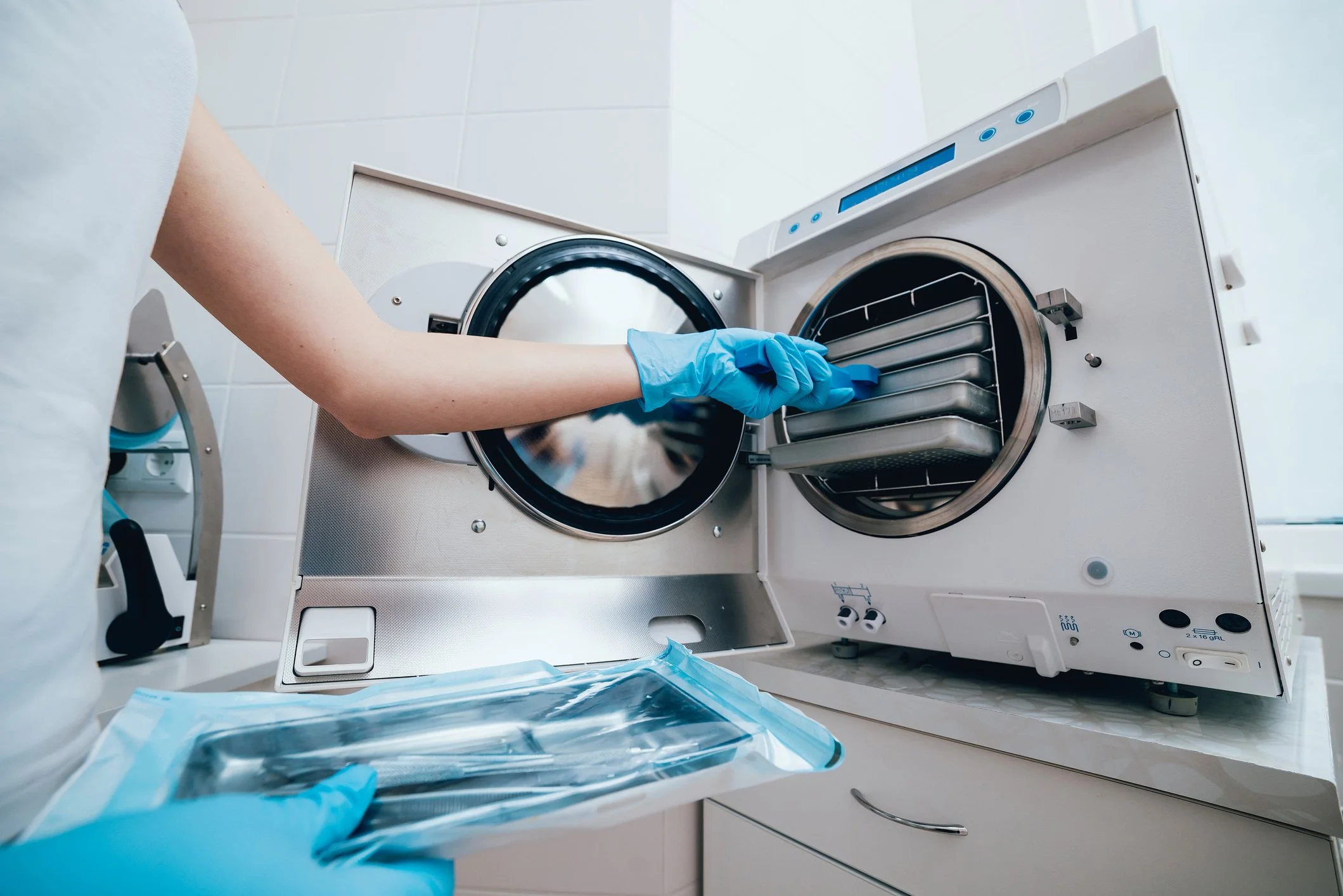
In outpatient clinics and small healthcare settings, steam for sterilization is typically produced by freestanding autoclave units. These devices contain built-in heating elements and generate steam from water added directly to the chamber, often utilizing RO-treated water. Staff in these facilities may not be familiar with terms like “steam system,” as the steam generation process is integrated within the device itself and does not require an external steam supply or specialized water chemistry management. This approach simplifies operations and is well-suited to the scale and needs of smaller clinics.
Understanding the distinctions between these steam generation methods is crucial for proper system design and compliance with regulatory standards. Each facility type has unique requirements for water quality and steam production, but the ultimate goal in all cases is to ensure that steam used for sterilization is free from contaminants and suitable for its intended purpose.
Monitoring and Compliance
ST108 requires facilities to initially qualify their water systems and maintain routine monitoring to ensure continued compliance. For utility water, facilities must test quarterly at points-of-use to confirm water quality and safety. Critical water requires daily conductivity checks and monthly microbial\endotoxin testing at both the system output and points-of-use. Document results, trends, and corrective actions are essential for survey readiness.
Why This Matters for Accreditation
Having the proper components in your water treatment setup ensures the quality metrics of utility, critical, and steam water according to ST108 can be met. Auditors increasingly ask where water is used, how quality is verified, where samples are taken, and how failures are corrected. Understanding system components and maintaining documentation supports compliance.
How Agenics Labs Can Help
Agenics Labs supports ST108 compliance with the Affirm™ suite of water testing kits designed for healthcare settings from large hospitals to outpatient settings. Affirm™ simplifies sampling, provides documented results for audits, and supports corrective action workflows.
-
Xylem: ANSI/AAMI ST108—Water for the Processing of Medical Devices: https://www.xylem.com/en-us/resources/articles/ansiaami-st108--water-for-the-processing-of-medical-devices/
EasyWater: AAMI ST108 Guide: https://easywater.com/commercial/shared-files/211085/?EasyWater%20-%20AAMI%20ST108%20Guide.pdf
AmeriWater: What You Need to Know About AAMI ST108: https://www.ameriwater.com/wp-content/uploads/2024/01/ST108_WhitePaper_122823.pdf
Infection Control Today: Understanding AAMI ST108:2023: https://www.infectioncontroltoday.com/view/understanding-aami-st108-2023-essential-guide-new-water-quality-standards-health-care
Team Apex: AAMI ST108 Summary: https://teamapex.com/wp-content/uploads/2024/10/Apex-AAMI-ST108-Summary.pdf
Hall’s Culligan: Sterile Processing Guide: https://culligancommercialwater.com/resources/sterile-processing-guide/
ANSI Blog: ANSI/AAMI ST108:2023—Water for Processing Medical Devices: https://blog.ansi.org/ansi/ansi-aami-st108-2023-water-quality-medical-devices/
Consteril: AAMI ST108 & Critical Water for Autoclaves: https://consteril.com/aami-st108-critical-water-quality-autoclaves/
AAMI Scope Excerpt hosted by StandardsClub: https://standardsclub.com/wp-content/uploads/pdf/2570532.pdf
Agenics Labs: AAMI ST108: Redefining Water Quality Standards in Sterile Processing: https://www.agenics.net/blog/2025/10/29/st108-summary